
Cross Roller Bearing Diagram Review
Send diagram evidence, roller orientation, load path, ring structure, mounting points, measurement points, application, quantity, and timing so TFL Bearings can review the RFQ path.
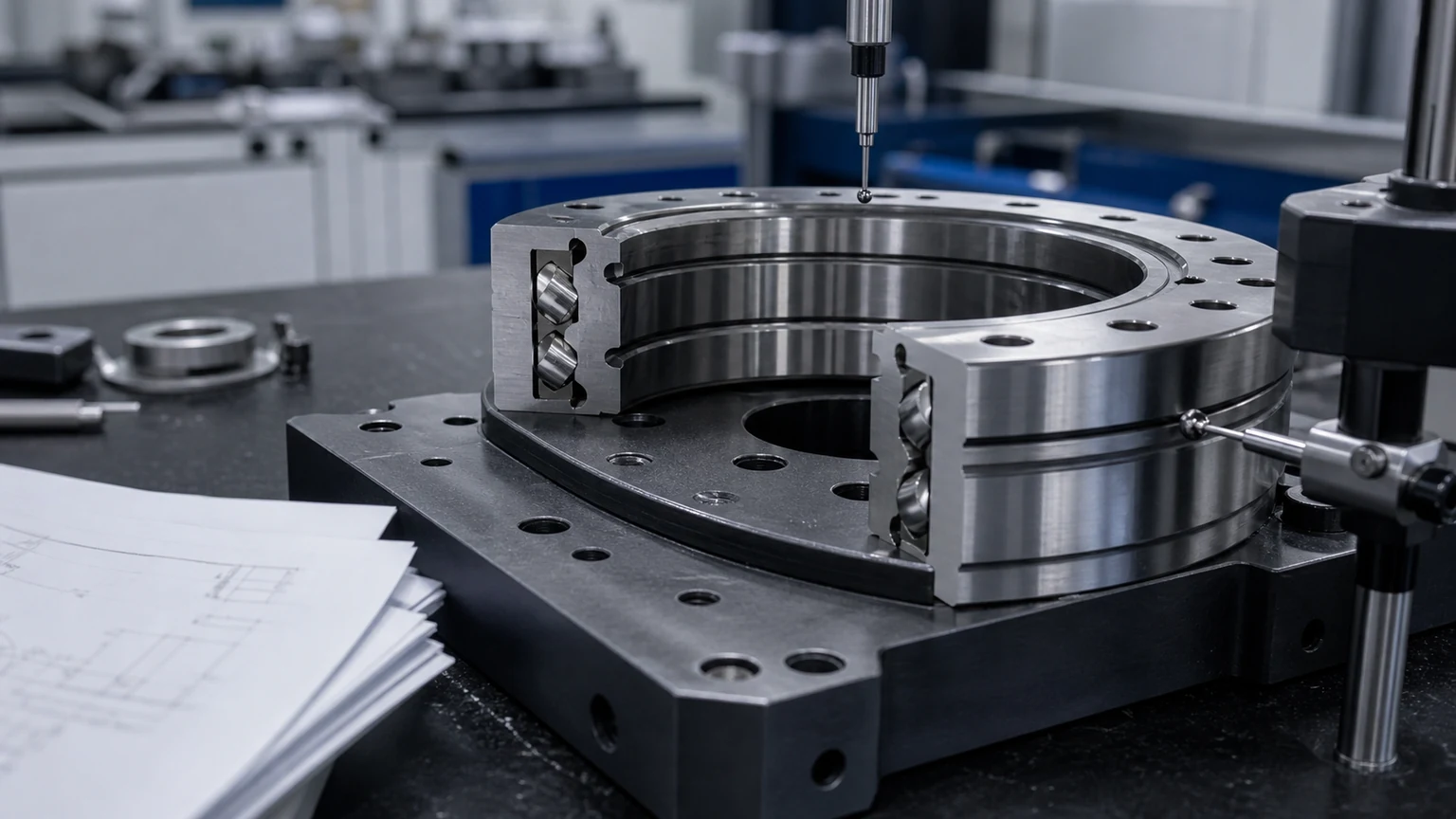
Diagram Evidence Review
TFL Bearings treats a diagram as RFQ evidence only when it connects geometry, roller orientation, load path, and application duty.
Crossed roller orientation
The diagram should show how rollers alternate and how radial, axial, and moment loads pass through the bearing.
Inner and outer ring form
Integrated, split, flanged, or mounting-hole structures can change product routing.
Seating and bolt references
Mounting faces, hole patterns, and adjacent parts should be tied to measured values.
Diagram to quote evidence
A diagram supports quotation only when model, dimensions, application, quantity, and timing are included.
Drawing and Measurement Checks Before RFQ
Diagram review should turn visual structure into measurable evidence that TFL Bearings can validate.
Confirm orientation
Show roller direction, raceway position, inner ring, outer ring, and load path.
Record dimensions
Provide bore, OD, width, mounting holes, seating faces, and any section thickness shown on the drawing.
Attach real evidence
Add bearing photos, measured sketches, or CAD extracts when the diagram is not enough.
Connect application duty
State machine type, load direction, speed, preload, rigidity target, quantity, and target timing.
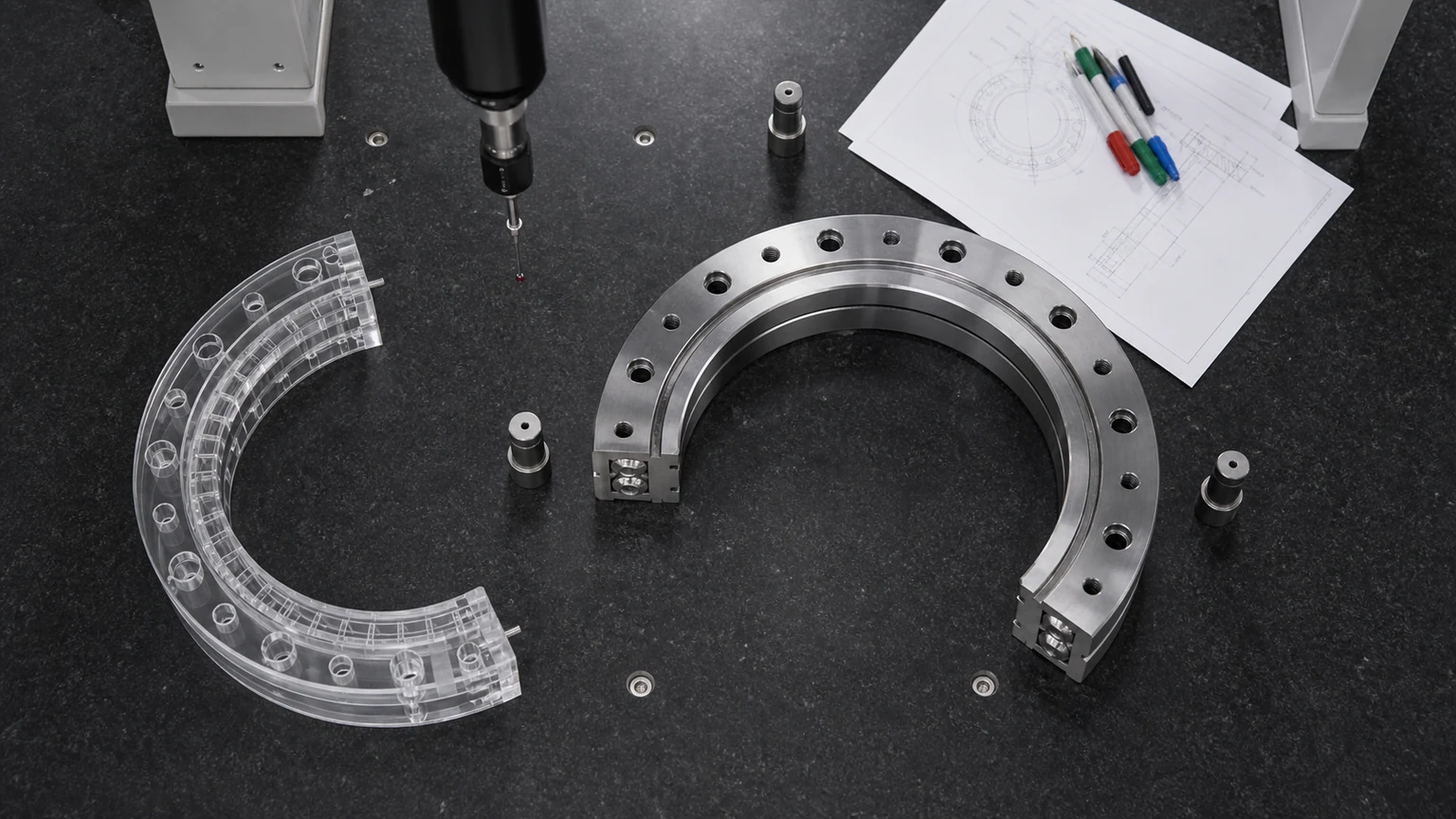
TFL Supply Chain Review Support
TFL Bearings acts as a bearing supply chain integrator, so model review can also cover sourcing route, cost-saving alternatives, inspection, documents, and export coordination after RFQ evidence is validated.
Pre-audited manufacturing resources
TFL Bearings can coordinate cross roller bearing options across reviewed China manufacturing resources when the RFQ includes model, drawing, quantity, and application evidence.
Cost-saving candidate review
For replacement or cross-reference work, TFL Bearings can review dimensional interchangeability, preload, accuracy, rigidity, mounting, and application limits before quotation.
BOM and shipment coordination
Mixed-model requests can be reviewed for one PO, combined shipment, inspection, export packaging, and document support when the order scope is clear.
Support Review Boundary
Boundary wording follows supplier action, evidence requirement, risk boundary, and RFQ next step.
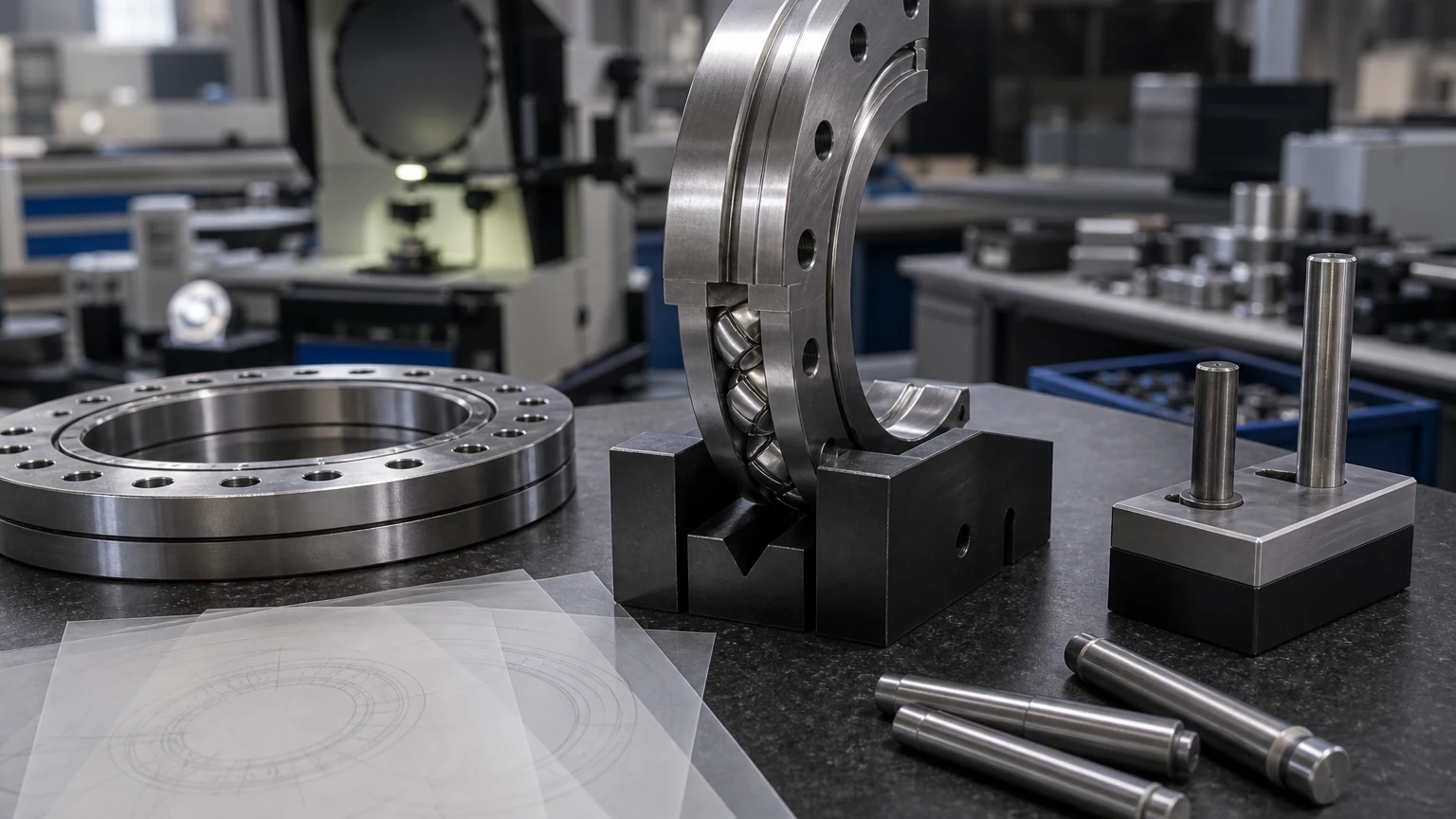
What to Send TFL Bearings
A support request becomes useful for quotation only when the technical evidence and purchasing scope arrive together.
Engineering Decision Layer
TFL Bearings reviews diagram evidence by connecting structure, dimensions, mounting interface, load direction, and application context before RFQ.
Catalog section, buyer drawing, CAD view, measured sketch, or sample photo
Changes how much validation is needed before candidate review.
Bore, OD, width, hole circle, seating face, ring split, and reference surfaces
Prevents the diagram from being treated as a finished fit decision.
Radial, axial, and moment load direction tied to the machine structure
Can change product family, preload review, or replacement path.
Application, quantity, target timing, and document need
Moves the request from support screening to quotation review.
Application Fit Notes
TFL Bearings reviews the support topic against the machine condition before treating the request as quote-ready.
RFQ Process Depth Layer
The support review path separates reference evidence from quotation evidence before pricing or timing discussion.
Evidence intake
TFL Bearings checks the submitted model evidence, drawing, dimensions, application condition, quantity, timing, sourcing goal, and open technical question.
Engineering screening
Load direction, mounting interface, preload, lubrication, rigidity, speed, heat, replacement route, and document scope are reviewed before quotation follow-up.
RFQ route decision
The request is routed to product review, replacement review, missing-evidence follow-up, BOM consolidation, or quotation after the support evidence is validated.
Practical RFQ Checklist
Prepare diagram evidence as a purchasing review package, not as a standalone reference image.
Send Diagram Evidence for Review- Diagram source, drawing revision, CAD extract, measured sketch, or sample photo.
- Bore, OD, width, mounting hole pattern, seating face, ring structure, and reference surfaces.
- Roller orientation, load direction, preload or clearance, rigidity, and accuracy requirements when known.
- Application, machine role, speed, duty cycle, lubrication, and environment.
- Quantity, timing target, destination, inspection need, and document request.
- The exact diagram question blocking product review or quotation.
Diagram Evidence Review Paths
Use these review paths to connect provided evidence with the next sourcing, application, replacement, or RFQ action.
Size chart review
Validate measured bore, OD, width, and mounting references.
Review optionCatalog and CAD review
Check catalog or CAD data before RFQ.
Review optionProduct family review
Connect diagram evidence to bearing family selection.
Review optionRFQ evidence intake
Send diagram evidence for TFL Bearings review.
Review optionFAQ
Yes. TFL Bearings can review diagram evidence when it includes model or drawing source, dimensions, mounting interface, application, quantity, and timing.
Useful details include roller orientation, inner and outer ring structure, bore, OD, width, mounting holes, seating faces, load direction, and application duty.
No. Fit review still needs measured dimensions, mounting details, application conditions, quantity, timing, and RFQ validation by TFL Bearings.
Send drawing or CAD source, sample photos, measured values, application, load direction, preload or clearance notes, quantity, target timing, and document needs.