
Cross Roller Bearings
Review cross roller bearings by model, bearing envelope, ring structure, mounting interface, load direction, accuracy requirement, drawing or sample photo, application, quantity, and timing.
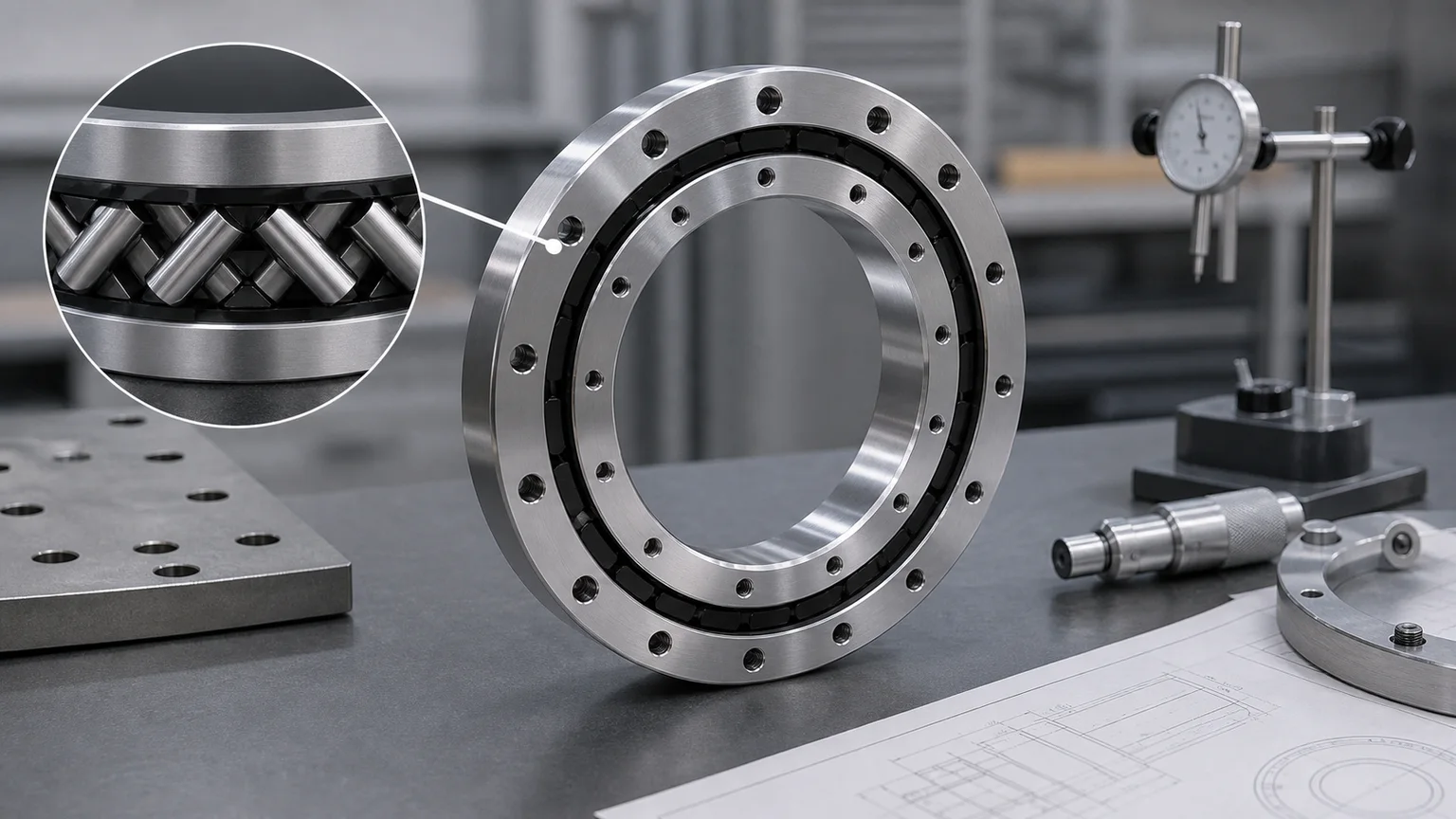
Bearing Selection Review
This page is for buyers who already know they need crossed cylindrical roller support, but still need the correct review path. Compact height, high rigidity, and combined radial, axial, and moment load support are only part of the decision.
Mounting face, seating face, hole pattern, preload or clearance, lubrication condition, and motion profile must be checked together.
Send model evidenceModel or Series Inquiry Parameters
These inputs keep the review grounded in engineering evidence instead of a part number alone.
Model or series
Defines whether the request is series-level, SKU-level, or drawing-based.
Model marking, old code, catalog reference, or drawing.Bore / OD / width
Confirms the bearing envelope before quote review.
Measured dimensions and tolerance notes.Ring structure
Integrated or separable rings affect mounting, rigidity, and fit.
Inner ring or outer ring structure, sample photo, drawing.Mounting hole pattern
Hole count and pitch can make similar bearings incompatible.
Mounting drawing, hole details, seating face notes.Preload or clearance
Changes stiffness, starting torque, and application fit.
Required condition or current machine information.Load and motion
Radial, axial, and moment loads shape the review path.
Application, load direction, rotation or indexing duty.Product Family Matrix
Keep child-page intent separate. Supplier capability, application context, custom drawing review, and cross-reference support should route to more precise pages.
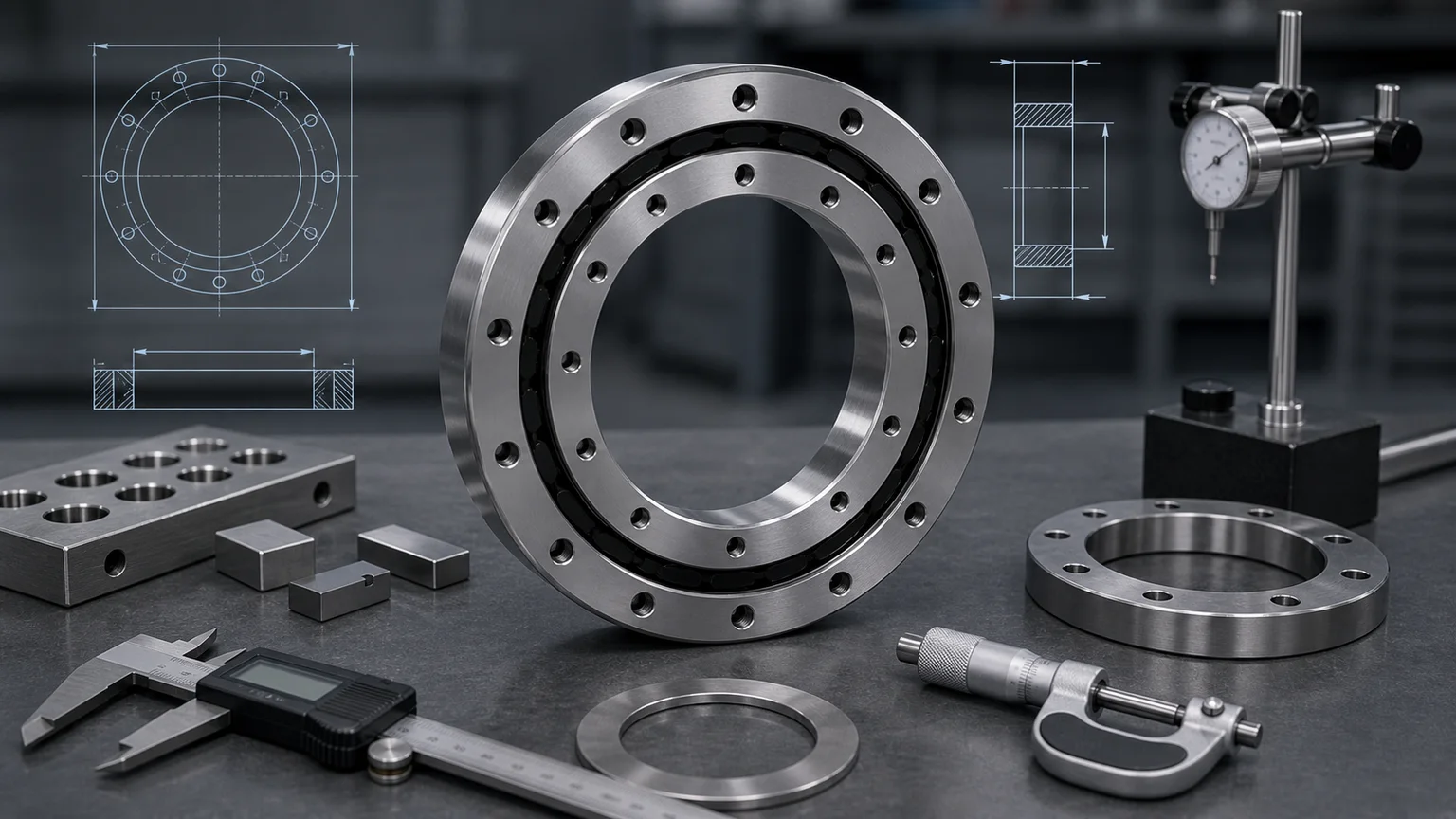
Where This Bearing Type Is Commonly Reviewed
Cross roller bearing requests commonly appear in robotics, rotary tables, precision positioning, maintenance replacement, and OEM equipment.
Robot joints and harmonic drives where compact envelope and moment rigidity matter.
Rotary tables and indexing tables where mounting face accuracy and runout checks become important.
Precision positioning stages where preload, smooth motion, and alignment affect the final review.
Maintenance replacement where old bearing markings, photos, and measured dimensions reduce wrong-model quoting.
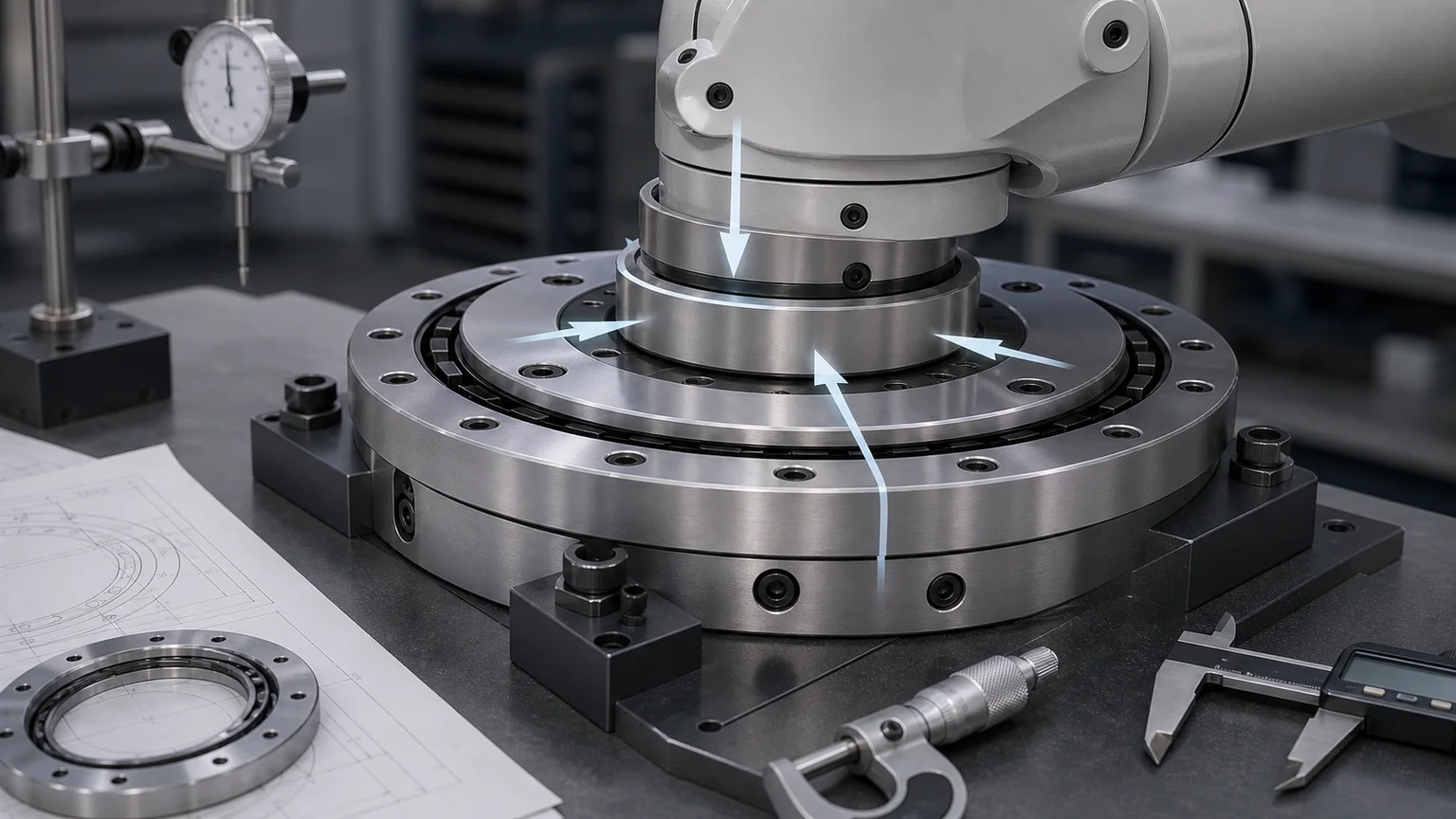
Selection Factors Before Quote
Ring integration, mounting side, preload, rotation accuracy, lubrication, contamination, and previous failure pattern can all change the RFQ path.
What to send before cross roller bearing RFQ review
Send model evidence, bore, OD, width, mounting details, drawing or photos, application, load direction, accuracy or preload notes, quantity, and target timing.
Request RFQ ReviewModel details
- Bearing model or marking
- Bore / OD / width
Technical needs
- Accuracy or precision requirement
- Mounting style or drawing
Application context
- Application and load direction
- Quantity and requested timing
Documents and contact
- Drawing, photo, BOM, or dimension sheet
- Inspection, document, packaging, or shipment need
Product Selection Requirements for RFQ
TFL Bearings must verify preload, rigidity, mounting structure, accuracy requirement, speed, heat, and lubrication before a quotation decision. A product name or nominal size does not confirm final fit.
Clearance, light preload, or defined preload condition
Changes stiffness, starting torque, heat, and service life before quotation.
Moment load, radial / axial support, and deflection limit
May change series choice, precision level, replacement path, or custom route.
Shaft fit, housing support, bolt pattern, seating face, and ring support
Mounting distortion can change runout and rotation accuracy.
RPM, duty cycle, lubricant, heat condition, and environment
Can change feasibility before RFQ and should be validated with application context.
Application Fit and Operating Limits
The same cross roller bearing envelope can require a different review path when moment load, rigidity, mounting access, heat, or lubrication changes.
Cross Roller Bearing RFQ Review Workflow
TFL Bearings separates evidence intake, engineering validation, and quotation decision so the buyer can submit a reviewable RFQ package.
Evidence intake
TFL Bearings checks model evidence, drawing, dimensions, photo, application, and quantity before selecting the review route.
Engineering validation
Load direction, preload, rigidity, mounting, accuracy, speed, heat, and environment are reviewed before quote preparation.
Quotation decision
Price, lead time, and confirmation notes are prepared only after the candidate route is validated.
Product RFQ Evidence Checklist
Send the model, dimensions, drawing or photo, mounting structure, preload or clearance, application, load direction, quantity, and timing together so TFL Bearings can validate the quote path.
Request Engineering Review- Model code, partial code, or bearing marking photo.
- Bore, OD, width, mounting holes, flange, and ring structure.
- Drawing, installation photo, CAD reference, sample photo, or measured sketch.
- Application, load direction, speed, duty cycle, and environment.
- Preload, torque behavior, rigidity, repeatability, or accuracy requirement.
- Quantity, timing, destination, inspection need, and contact details.
Related Product, Supplier, Application, and RFQ Links
Final internal links are preserved even if some routes are scheduled for later rebuild.
Reduce sourcing friction with clearer cross roller bearing RFQ review.
Pre-audited sourcing review
TFL Bearings can coordinate cross roller bearing options across reviewed China manufacturing resources after model, drawing, and order scope are clear.
Drawing and replacement assessment
Drawings, photos, BOM lines, measured dimensions, preload, accuracy, and mounting details help screen replacement and cost-saving candidate routes.
BOM, document, and shipment support
Mixed-model requests can be reviewed for one PO, consolidated shipment, pre-shipment inspection, export packaging, and document needs.
FAQ
Yes. TFL can review the request when model evidence, dimensions, mounting interface, load direction, application, and quantity are provided before RFQ.
Send the model or marking, bore, outside diameter, width, mounting details, drawing or photos, application, load direction, accuracy or preload notes, quantity, and target timing.
Yes. A drawing, sample photo, or measured bearing can support review when it shows the mounting interface, ring structure, dimensions, application, and quantity.
No. Price, stock, and lead time are reviewed only after the model, dimensions, drawing or photo, application, quantity, and delivery context are clear.