
Cross Roller Bearing Applications and Fit Review
Route robotics, harmonic drive, rotary table, automation, machine tool, and positioning-stage requests with the operating details, sourcing expectations, and document requirements TFL Bearings reviews before RFQ.
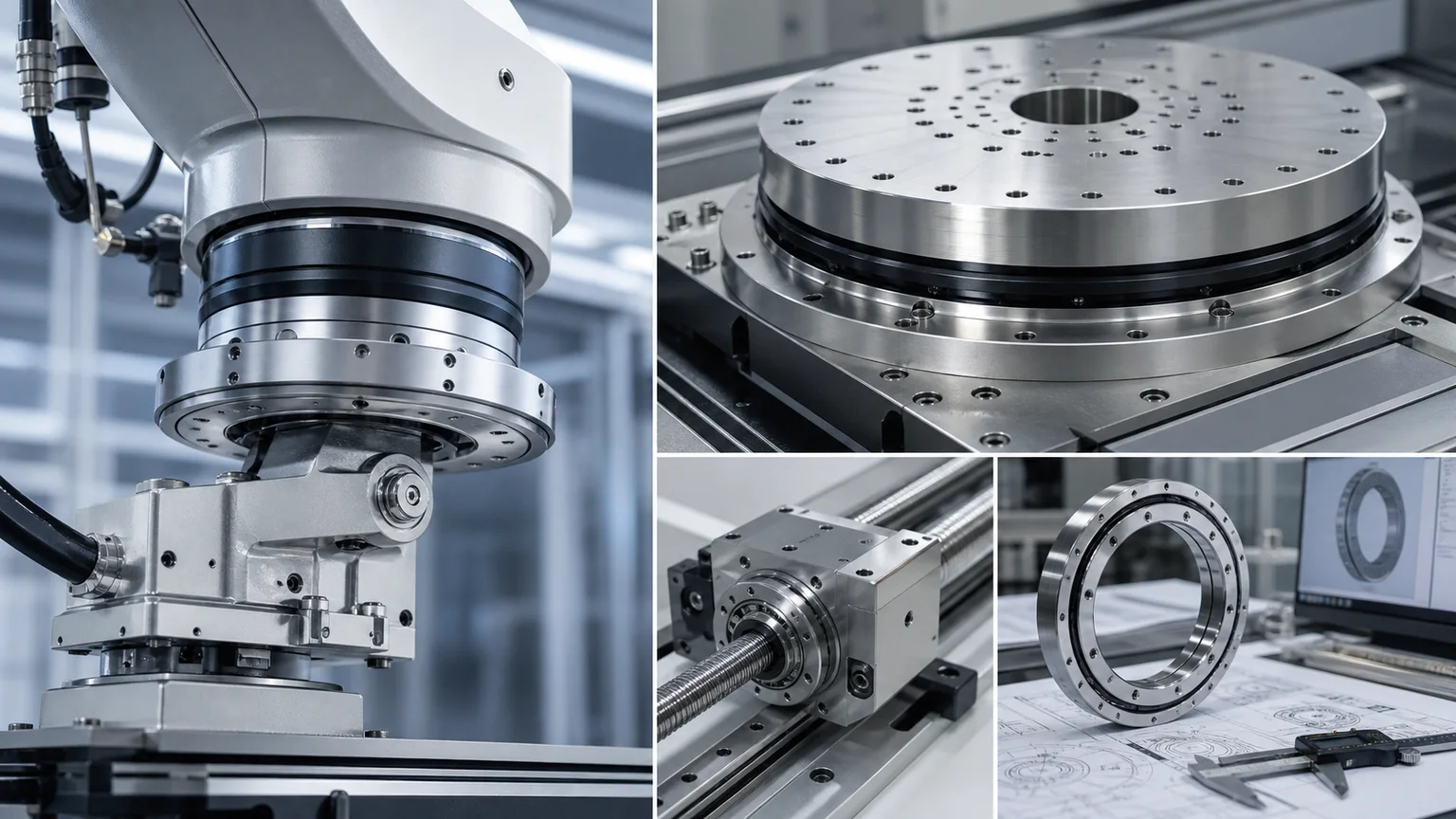
Application Routing Table
Select the route that matches the machine task, then send the evidence needed for review.
Robot joint and harmonic drive
Compact support, moment load, stiffness, and output interface.
Reducer drawing, shaft or housing details, load direction, quantity. Review optionRotary table and indexing axis
Axial, radial, and moment load in repeated rotation.
Table size, load, speed, runout target, lubrication context. Review optionAutomation and inspection equipment
Repeatability, smooth rotation, and compact envelope.
Motion cycle, payload, environment, mounting face. Review optionMachine tool or spindle-side support
Rigidity, runout concern, contamination, and preload context.
Drawing, load, speed, coolant or chip exposure notes. Review optionPrecision positioning stage
Low motion error and stable support.
Axis layout, travel or rotation pattern, accuracy need. Review option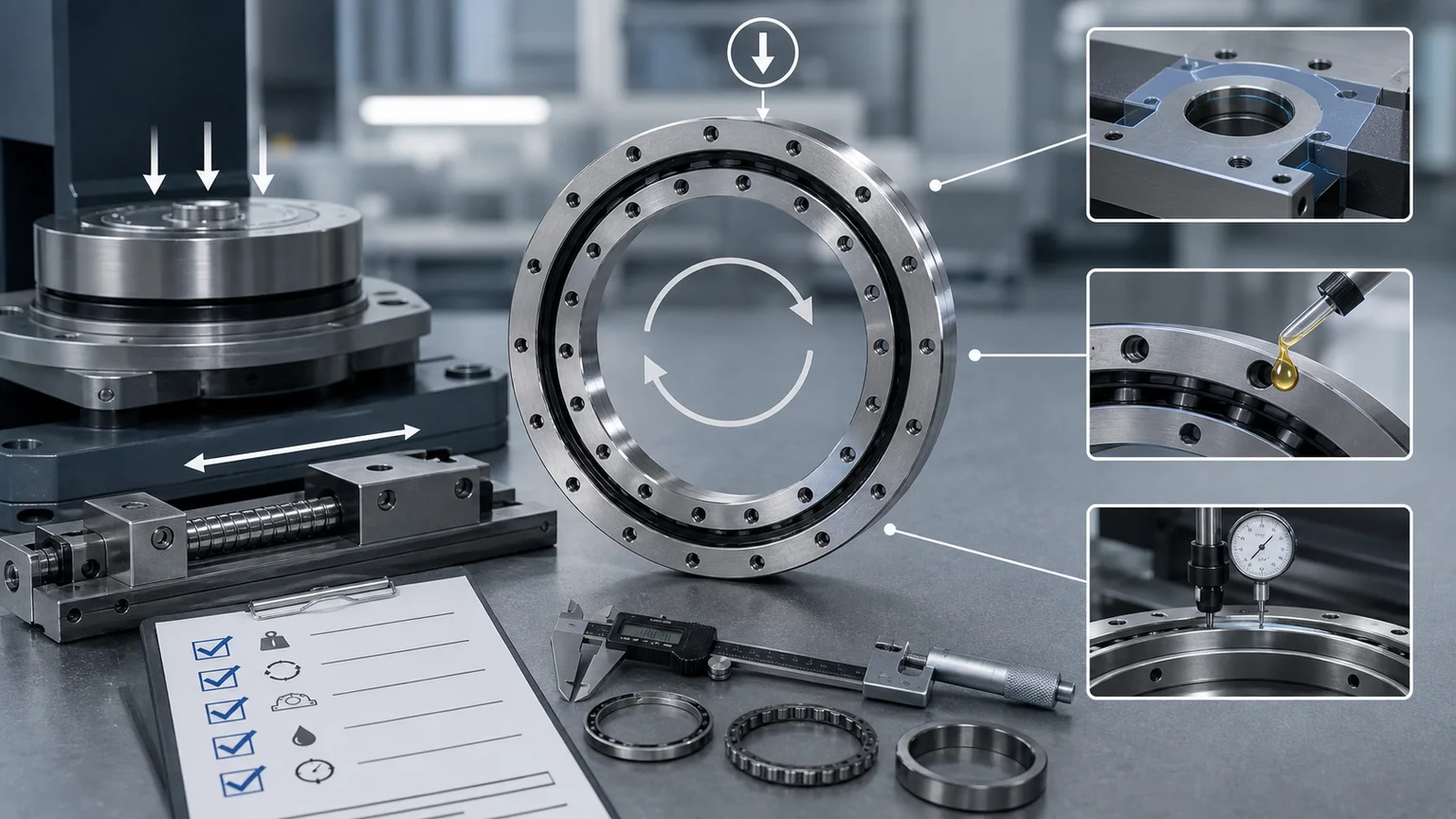
Operating Condition Checklist
Application review is clearer when the buyer sends machine context, not only an industry name.
Application Constraint Review
Application fit depends on how the bearing is loaded, mounted, lubricated, controlled during operation, inspected, and shipped. TFL verifies these constraints before selecting, sourcing, or quoting a bearing route.
Confirm radial, axial, moment, combined, or shock load
Load behavior changes ring stress, rigidity demand, and product route.
Verify torque behavior and repeatability target
Preload controls heat, motion stability, and service life in the machine.
Review housing, shaft support, bolts, and surface quality
Mounting sensitivity can distort rings and affect runout.
Check RPM, duty cycle, heat, contamination, and lubrication
Operating limits can change the bearing route before RFQ.
Fit Notes by Machine Condition
Different machine conditions require different evidence before RFQ. The application name is only the routing start.
Application RFQ Review Workflow
The review path moves from machine condition to constraint validation, then product, replacement, sourcing, or document-support route selection.
Confirm machine condition
TFL reviews machine type, function, load direction, speed, and required accuracy.
Validate constraints
Preload, rigidity, mounting, lubrication, environment, and heat behavior are checked before route selection.
Route to RFQ
The request is routed to product selection, replacement, cross-reference, custom review, sourcing review, or document support before quotation.
Application Evidence Handoff
Send bearing model or marking, dimensions, drawing or photo, mounting style, load direction, speed, rigidity target, quantity, timing, inspection, export document, and shipment needs.
Application RFQ Evidence Checklist
Use this checklist when application conditions drive bearing selection, replacement, or cross-reference review.
Request Application Fit Review- Machine type and function.
- Existing model, drawing, installation photo, or available space.
- Load direction, moment load, speed, duty cycle, and environment.
- Preload, torque behavior, stiffness, or runout requirement.
- Quantity, timing, inspection, and document needs.
- Replacement or cross-reference evidence when an old bearing is involved.
FAQ
No. Application name helps route the request, but model review still needs dimensions, mounting, load direction, motion cycle, and quantity.
Send reducer drawing, available space, load direction, moment load notes, mounting details, quantity, and any existing bearing model or photo.
Use the RFQ page and include model evidence, measured dimensions, drawing or photo, application conditions, quantity, timing, and contact details.